


The Tauko Down Coat – A Classic Born of Necessity
The guest blogger, Joppe Ranta, is an outdoor journalist and gear expert.
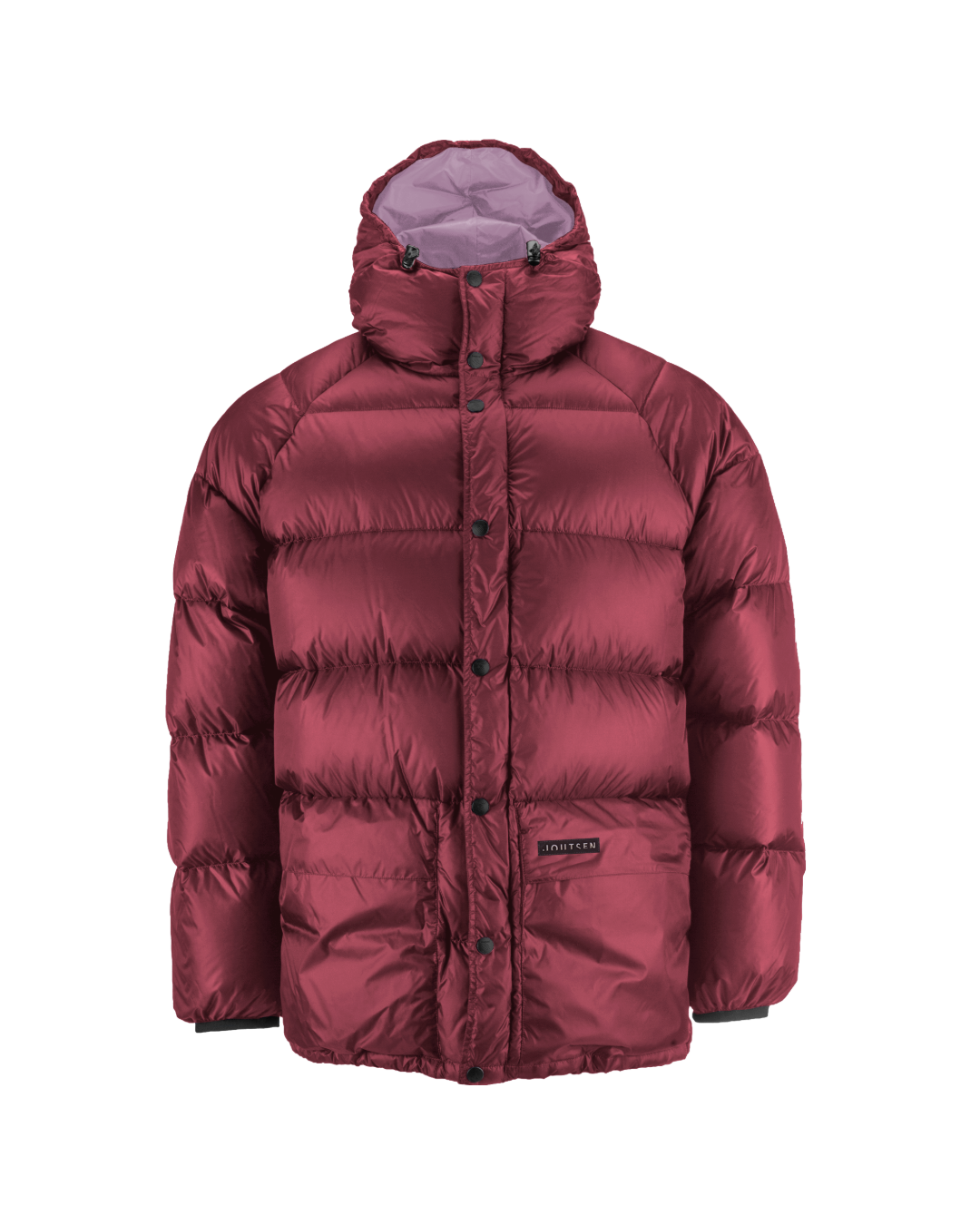
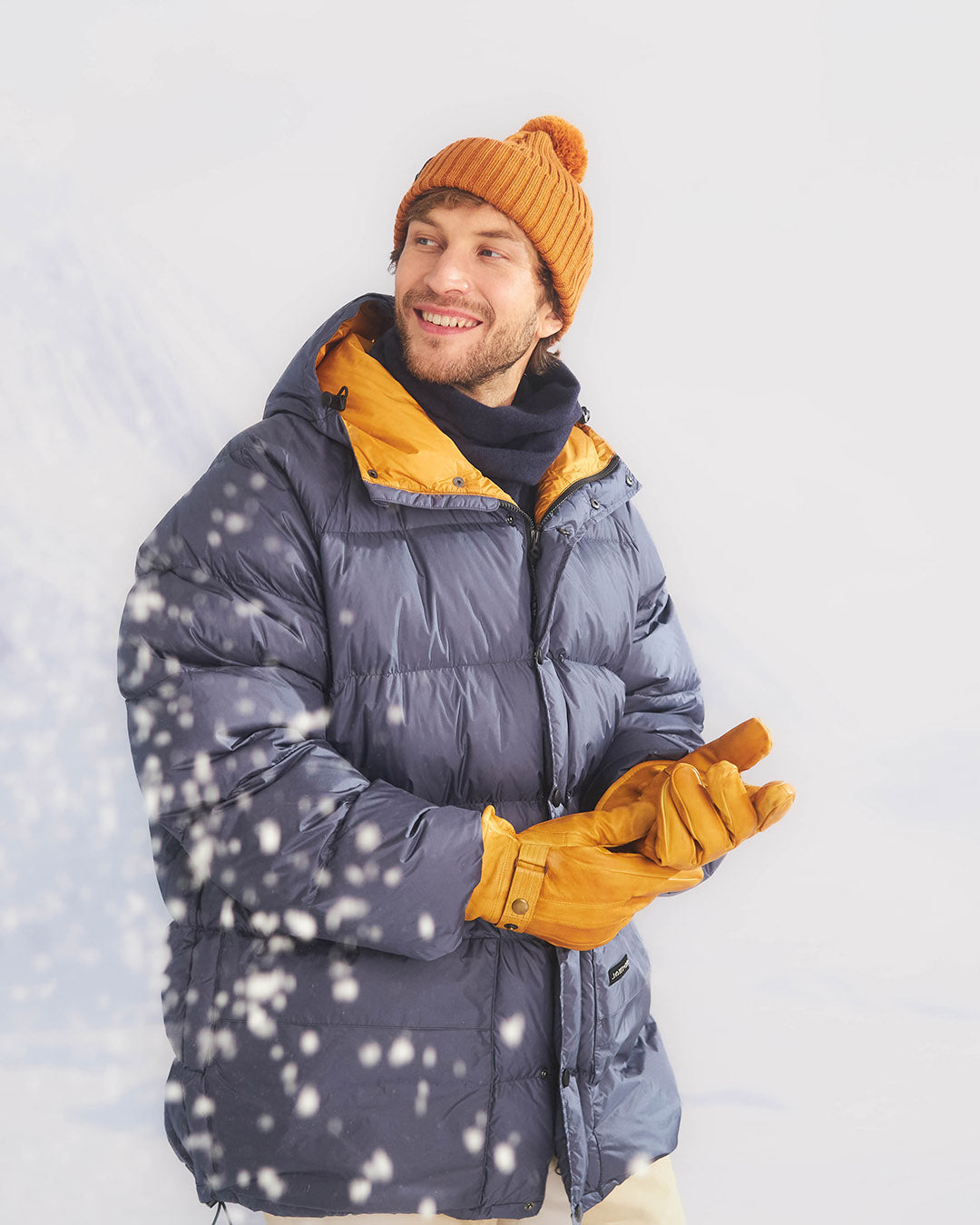
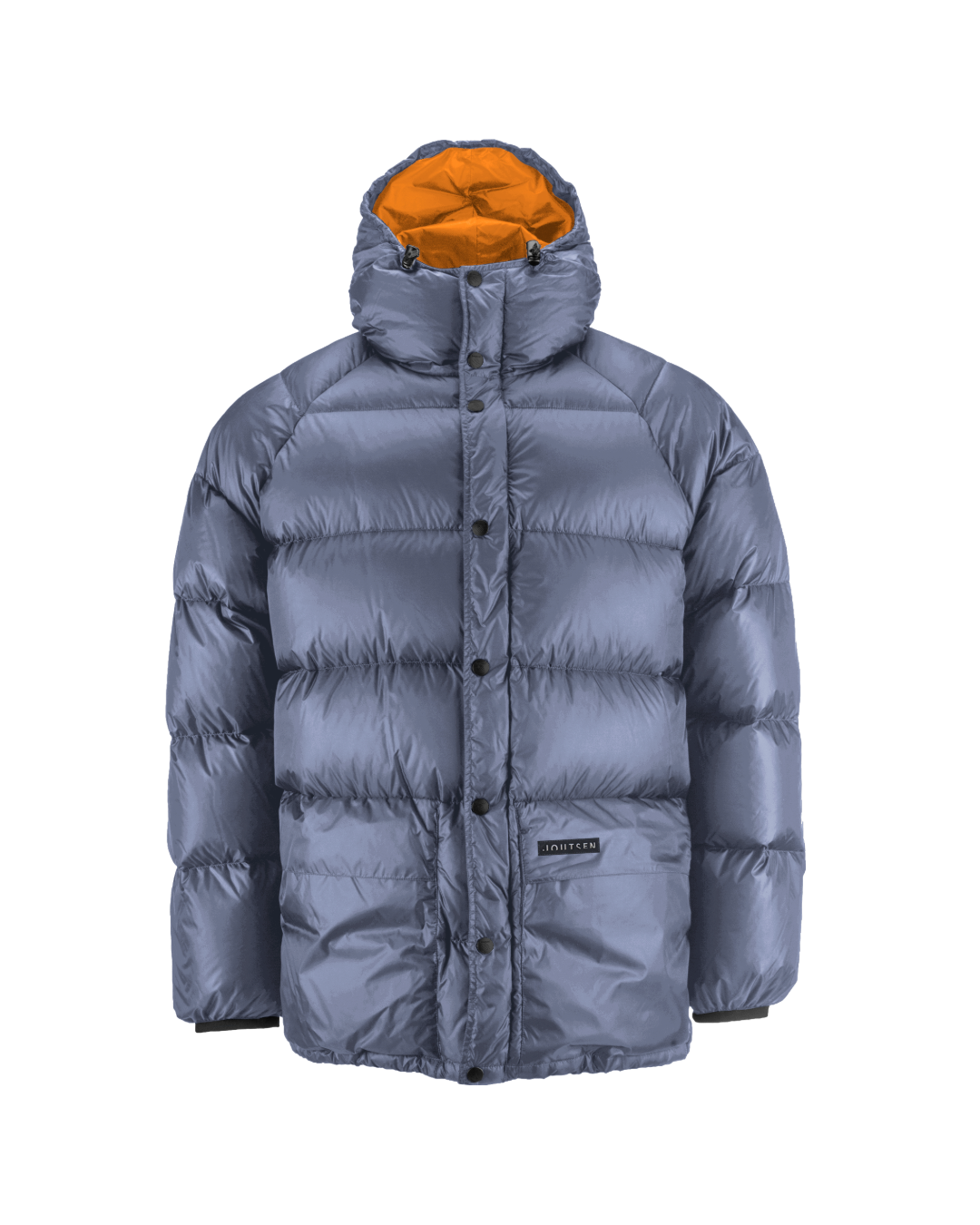
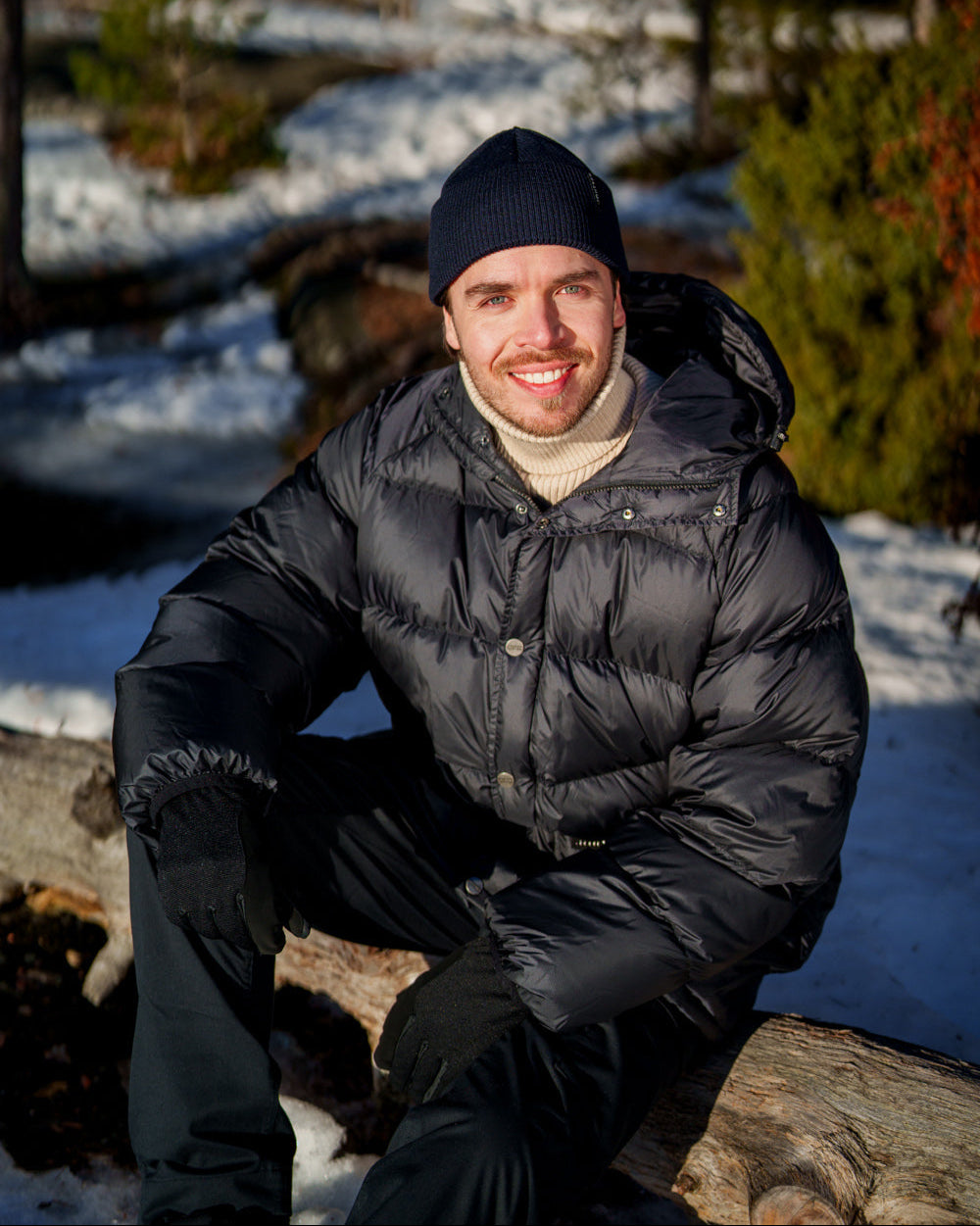
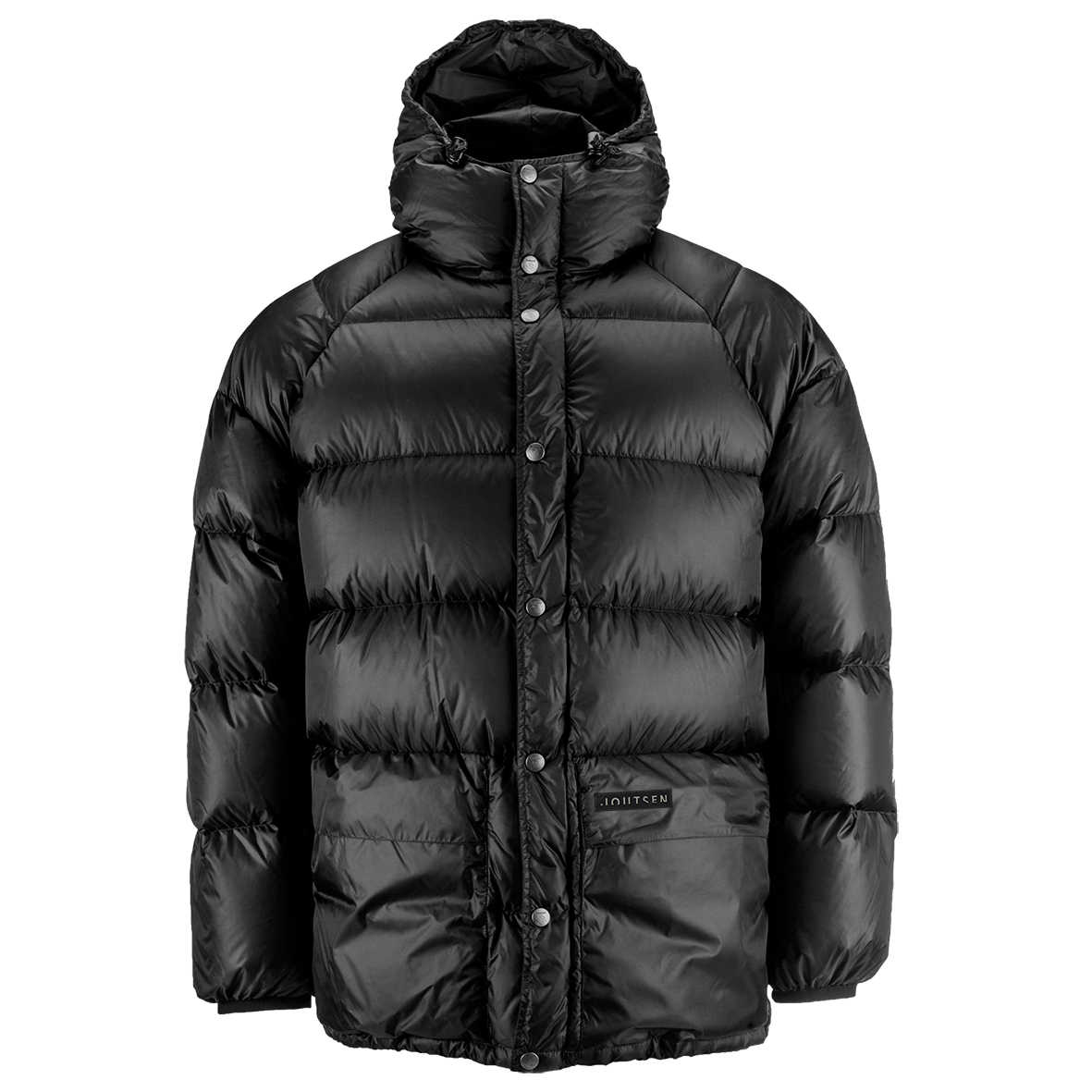
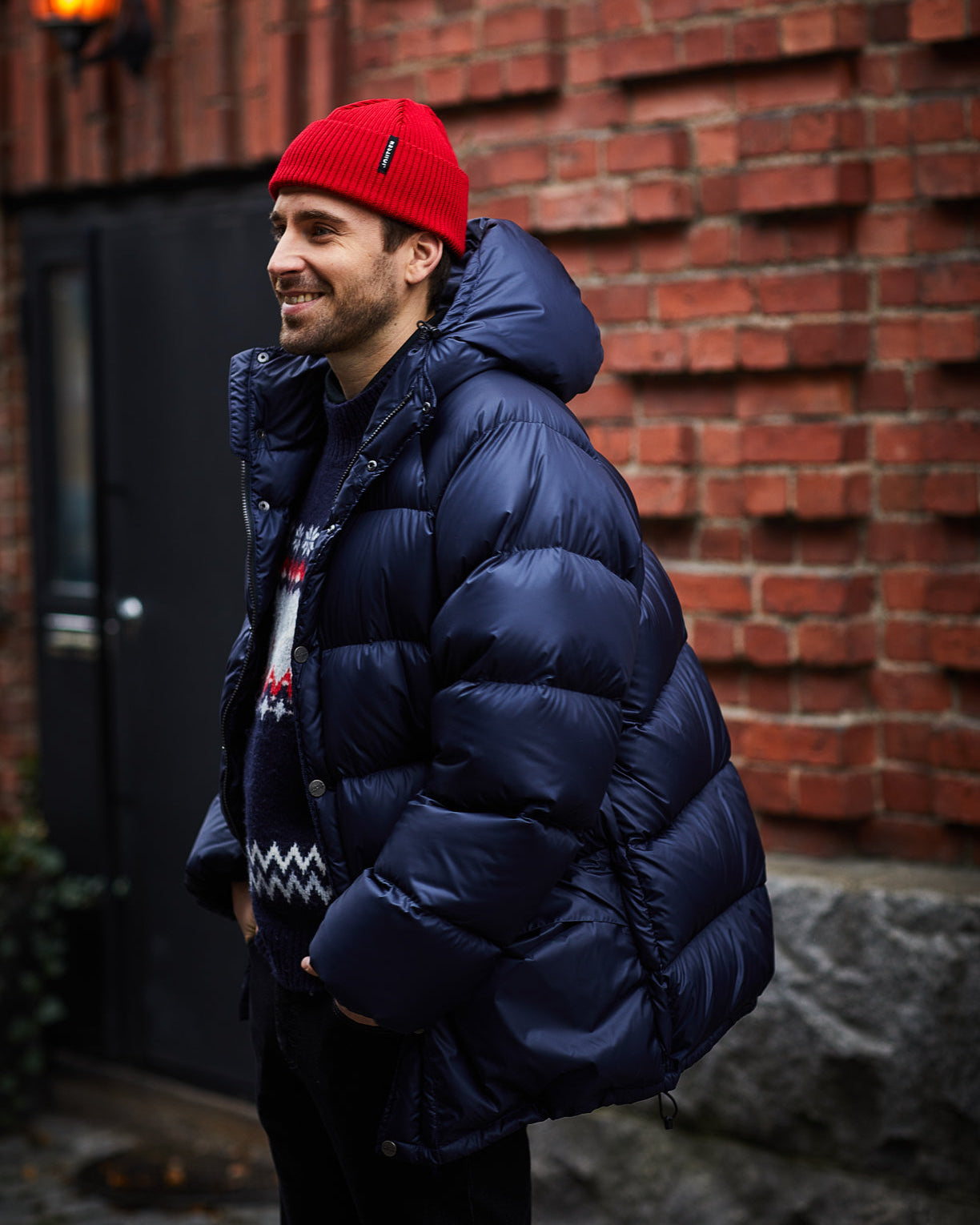
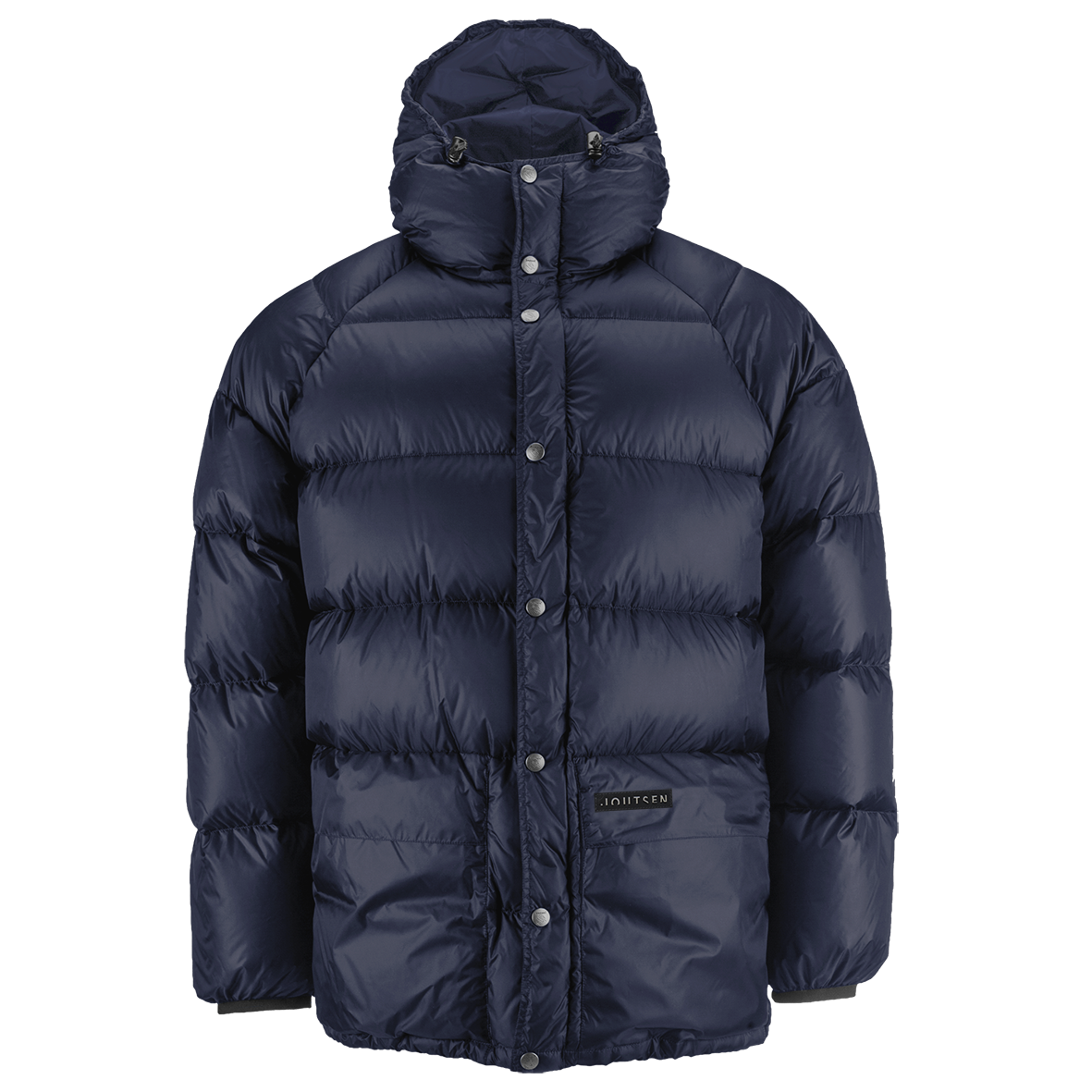
The Tauko down coat is a coat that still answers a very real need.
When you stop after a sweaty physical effort, the body is at its most vulnerable. Perspiration draws heat away, cold air reaches the skin, and in the worst case, this leads to rapid chilling, even hypothermia. That is why skiers, hikers, and explorers have, from very early on, put on an insulating extra layer during breaks and while setting up camp. It is precisely for these moments that the belay jacket was originally intended.
Although it is often referred to as a “warming layer,” an insulating garment does not actually generate heat. Its purpose is to trap air and prevent the heat produced by the body from escaping. There are major differences between insulating materials. For centuries, added warmth has been sought from reindeer hair, wool, and down. Compared to these, synthetic fibers are a relatively recent invention, and even today, they do not match the insulating power of down relative to their weight.
As early as the 1960s, outdoor enthusiasts knew what was required of a break coat. In his 1966 book Eräretkeily (Wilderness Trekking), Kullervo Kemppinen writes:
“Both in summer and winter, one needs a warm, windproof, and sufficiently loose pullover or coat-like garment that can be pulled on during breaks on a windy fell plateau and in the evening while staying in camp. Such a garment should be light enough to carry along, yet sturdy enough to protect a perspiring traveler from wind and cold.”

A down coats packs small
The roots of the modern Tauko down coat and its name likely lie in the Swedish mountains. Several Swedish works note that “down coats are excellent garments for rest and camp life, but they are too warm to be worn during exertion.” They are also described as garments that “should be long and roomy, and should have two-way zippers. A down coats that packs down small is easy to carry along.”
Greenland and the birth of the Finnish Tauko down coat
In Finland, the roots of down-filled down coats—and of Joutsen’s coat production—go back more than 60 years, to the Greenland crossing by the first Finnish ski expedition led by Erik Pihkala.
One member of the group, Christer Boucht, writes in his book Hiihtäen halki Grönlannin (Skiing Across Greenland):
“The group avoided the grim fate of many earlier expeditions, and none of its members was even seriously injured. Of course, it benefited from knowledge of the mistakes and experiences of its predecessors, but its equipment was nevertheless designed in an original way, avoiding direct imitation and seeking new solutions. Most of the expedition’s gear was custom-made by Finnish manufacturers. In the design, the good qualities of domestic winter trekking equipment were also taken into account.”
Suomen Höyhen Oy—today known as Joutsen—was one of the companies with which the expedition collaborated.
“None of this equipment was accepted without testing. Pihkala undertook countless tent and ski trips to test the gear while at the same time building fitness for the forthcoming major expedition. Garments made of synthetic fibers were not accepted at all. The requirements were strict and were followed without compromise,” wrote Christer Boucht.

Christer Boucht’s down jacket, used during the ski crossing of Greenland in 1966. (Photo: Finna / Sports Museum collection)
As a result of this collaboration, the expedition received a down-filled outfit consisting of three-quarter-length trousers and a hooded, hip-length jacket, used specifically during breaks and in camp. On the coldest nights it was even worn inside an eiderdown sleeping bag as additional insulation. Synthetic fibers were not accepted at all. Weight, packability, and reliability were decisive factors.
Joutsen’s Legendary Tauko Down Coat
Thanks to the experience gained from Erik Pihkala’s expedition equipment design, down coats became a permanent part of Suomen Höyhen Oy’s collection. The range included sturdy parka coats and lightweight pullovers. The true belay jacket went into development at the turn of the 1980s and 1990s, driven by user requests:
-
generous sizing to fit over other clothing
-
light weight
-
small packed size
-
a hood that can accommodate both a hat and a shell jacket hood
The result was the legendary Tauko down coat, which—with only minor changes—has continued its success to this day.

Arctic wilderness guide Noora Peteri has also worked in Antarctica and on Svalbard. The Tauko is her trusted piece of equipment.
When the Original Purpose Is Forgotten
Over the years, the idea behind belay coats has partly become blurred. In order to reduce weight, many manufacturers have narrowed the fit so much that many coats intended as belay jackets can no longer be worn over other clothing, turning them more into general-purpose garments.
The intended use is no longer clearly understood, and belay coats are criticized for being cool compared to parka jackets. In doing so, weight—and its importance—is forgotten. At the same time, it is overlooked that a belay jacket is a compromise, like almost all outdoor gear. No product works everywhere and for every user.
The belay coat was created to meet a need that, at its best, can save its user’s life. That is precisely why it remains relevant today.


Read more

At Christmas, home transforms into a sanctuary where peace, warmth, and togetherness are present. In this visually rich blog, we dive into soft moments: the lightness of down, the slow pace of the...

Although the Kulkuri down throw was not created overnight, it was loved from the very first moment. Joutsen’s story with travel and outdoor throws goes back surprisingly far. As early as the 1950s,...